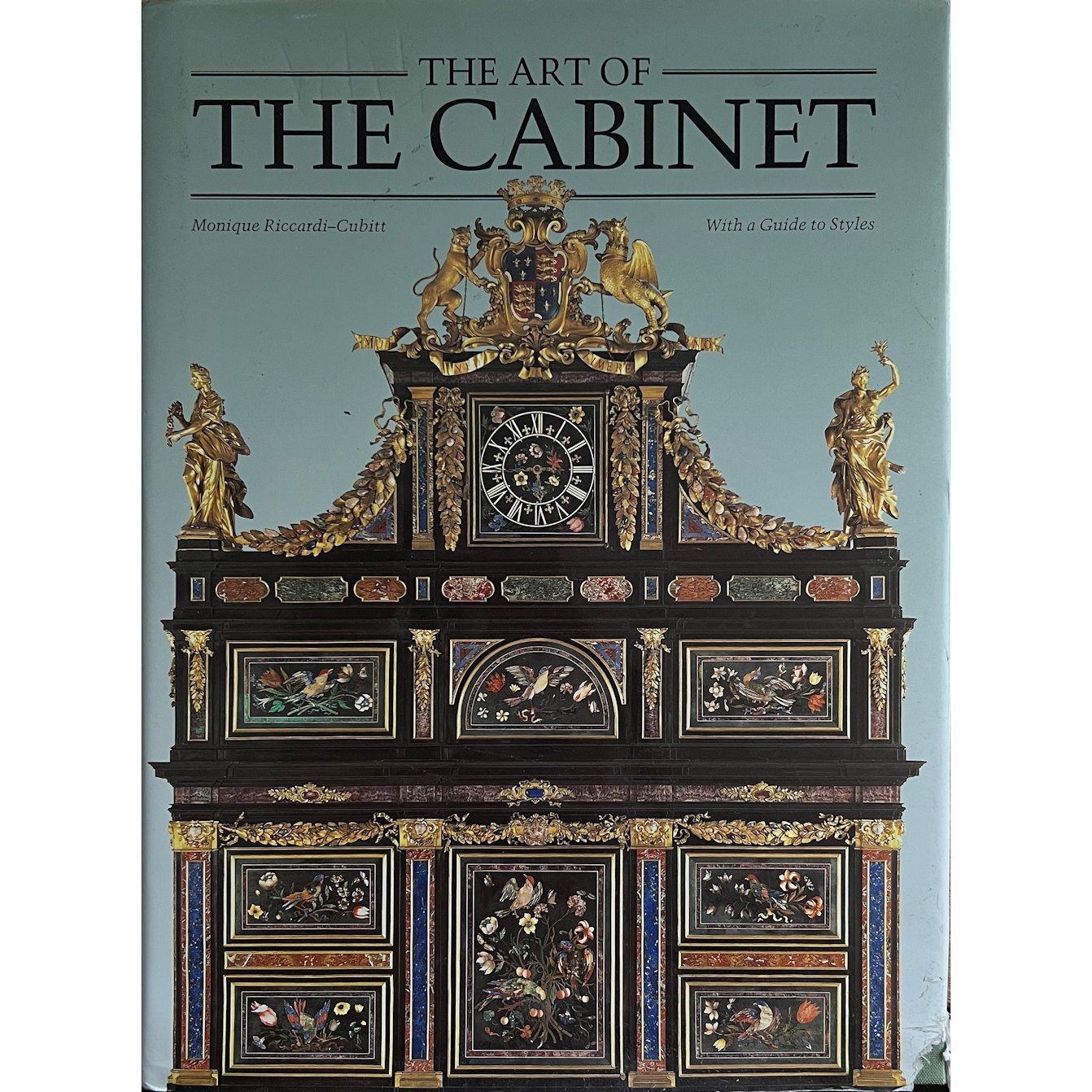

The Art of the Cabinet: Including a Chronological Guide to Styles by Monique Riccardi-Cubitt
Hardback
Pages: 224
Size: 30.0 x 22.0 cm
Published: 1992
Publisher: Thames & Hudson Ltd
Stock number: TAOTC/ARB
Price: £22 + P&P
From the cover: “The cabinet is the epitome of magnificent form and luxurious technique, amongst the most treasured of all items of furniture – in keeping with its basic purpose: to store, protect and conceal everything most precious.
Defined as a chest with compartments and drawers, the cabinet has a long pedigree. This complete historical study begins with examples of chests from Tutankhamun’s tomb. Classical Rome passed on this heritage to the Byzantine world, but it was in the Renaissance that the West adopted fine cabinets as luxury items, as prized as the objects they contained. The fifteenth-century studiolo was a centrepiece of the humanist ideal of secular knowledge, and was correspondingly embellished. As European explorers pioneered new overseas empires, the cabinet grew in importance as a portable writing desk and secure container for documents. Sixteenth-century Mannerism brought a taste for precious and exotic materials applied through new ornamental techniques and the rise of the display piece for wealthy collectors -the Cabinet of Curiosities. Baroque cabinetwork flourished under Louis XIV: Versailles held some of the most splendid of what were now lavish, ostentatious symbols of wealth and power. Further developments such as the fashion for lacquered chinoiserie decoration continued into the eighteenth century; new forms evolved in the English bureau-cabinet and the French serre-bijoux. Even after the Industrial Revolution, new mechanical techniques allowed virtuoso exhibitions of veneering in eclectic creations tailored for a middle-class clientele. Art Nouveau and Art Deco saw the last products of a great tradition which faded with the social standards and values that had been the cabinet’s raison d’etre.
Numerous colour plates illustrate every stage of the cabinet’s evolution, whilst the text sets its story against the wider background of social, technological and economic change. An illustrated guide to styles is supplemented by biographies of craftsmen and designers, a glossary and a full bibliography.
This unrivalled survey will be indispensable for collectors, for everyone interested in furniture history, and for all connoisseurs of the craftsmanship of luxury objects.”
Dust jacket torn front bottom right hand corner as seen in photo.